Developing the Bathroom Door
You Spoke, We Listened
Through a rigorous design process, we created our ligature-resistant bathroom door in partnership with you, involving your insight and expertise at every stage of development. Not just one voice, but hundreds of them from across Behavioral Health care.
US Design Guide Approval
Office of Mental Health New York (OMH-NY): Patient Safety Standards, Materials, and Systems Guidelines
Veteran Affairs: Inpatient Mental Health and Residential Rehabilitation Treatment Program Design Guide
Behavioral Health Facility Consulting: Behavioral Health Design Guide
Developing Our Award-Winning Ligature-Resistant Bathroom Door
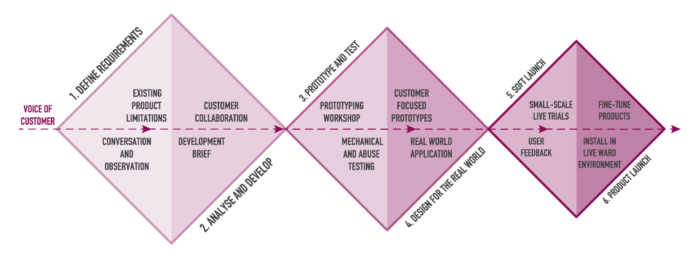
You shared the challenges you faced with existing bathroom doors in Behavioral Health settings. We listened, and over 18 months we followed a rigorous design process to develop an award-winning ligature-resistant bathroom door that makes your facilities safer.
Working with more than 120 professionals across 20 Behavioral Health organizations, we applied our Voice of Customer (VOC) approach at every stage of a six-step design process.
The result is an award-winning door that achieves the right balance of safety, practicality, dignity, and value, recognized by industry judges as truly lifesaving.
Trial Our Award Winning Door
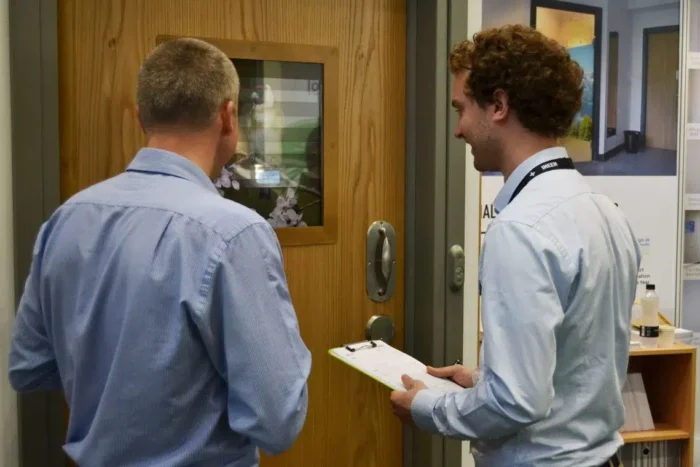
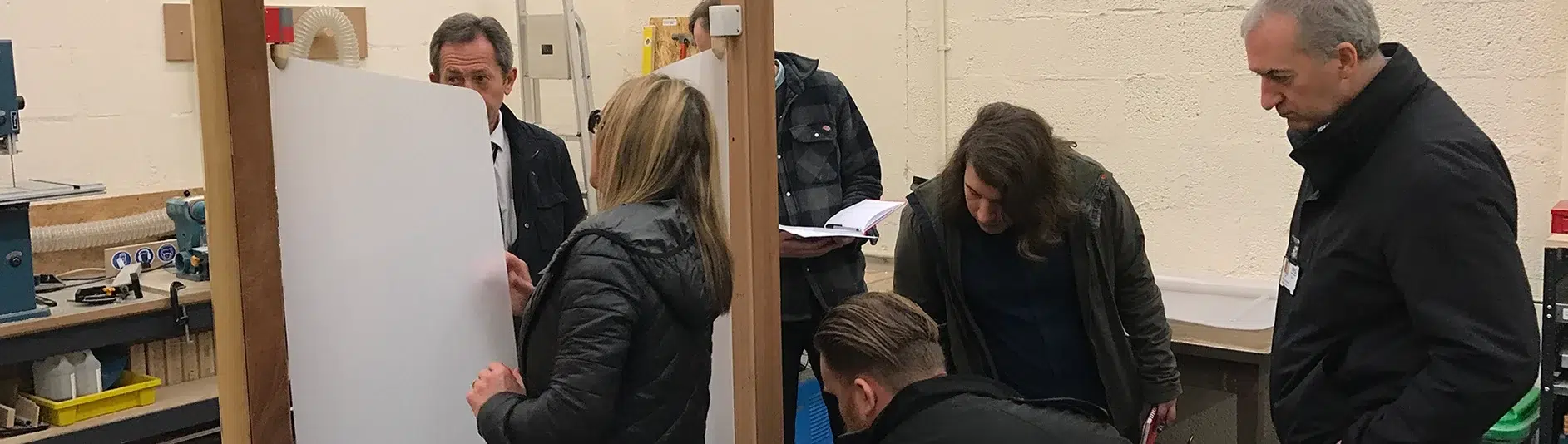
Phase 1: Defining the Requirements for Our Ligature-Resistant Bathroom Door
We began with our belief that good design starts with conversation and observation. At the 2016 Design in Mental Health Conference, we asked care professionals to share the challenges they faced with existing bathroom doors. Nurses, ward managers, clinical directors, and safety officers all told us that options such as sliding doors created multiple ligature risks.
From those conversations, we developed our first key design insight: two hard surfaces meeting can create a ligature point.
We then carried out research in active Behavioral Health environments. By observing teams in their day-to-day work, we identified the biggest issues with existing doors – risks of weaponization, limited visibility for staff, ligature points, and disruptive noise that affected the therapeutic atmosphere.
Phase 2: Analyzing and Developing the Bathroom Door Design Brief
Gathering feedback from clinicians, clinical directors, and facilities teams revealed the need to balance several competing priorities, including safety, maintenance, and clinical practicality. Clinicians raised concerns about how the door would perform in daily use and whether it would support safe, therapeutic care. Facilities and capital planning teams emphasized the importance of durability, ease of maintenance, and cost-effectiveness when replacements were needed.
By listening to each perspective, we created a design brief that brought together every critical requirement. This ensured our solution would meet the operational, safety, and clinical needs of everyone involved in Behavioral Health care.

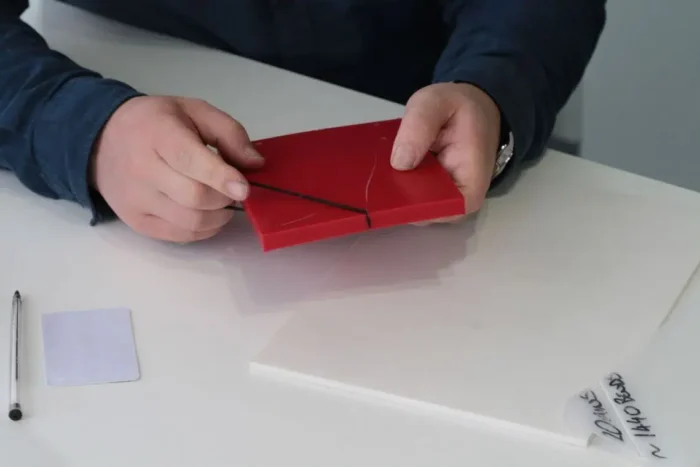
Phase 3: Bathroom Door Prototyping and Testing
We tested a range of materials, door leaf options, and hinging systems to explore different concepts. Our initial prototype used a rubber material, but we soon discovered it could be manipulated to create a ligature point. By rubbing a credit card back and forth, a ligature risk appeared in under ten minutes.
This led to our second key design insight: soft materials can be tampered with and turned into ligature points.
Our third insight was that load release is essential for a high-risk door. This discovery guided our decision to use magnetic pivots in our ligature-resistant bathroom door. With this design, we could ensure that any tampering with the door leaf would not create a ligature risk, providing both safety and peace of mind.
Testing the Bathroom Door
The product was then tested using methods consistent with Behavioral Health design guidance and real-life scenarios specific to bathroom environments. For example, we kicked the frame mounts repeatedly to confirm they would not loosen or break under pressure. We also performed the HBN mallet test to verify that the door could withstand extreme impact and continued use.
You told us that existing doors raised serious concerns about weaponization. In response, we conducted targeted weaponization tests to ensure staff safety and confirm that, if needed, the door leaf could be safely removed from an aggressive patient during an intervention.
Phase 4: Designing for the Real World
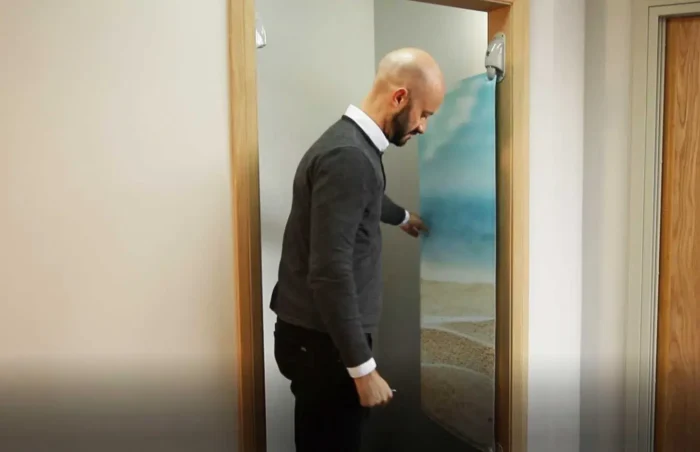
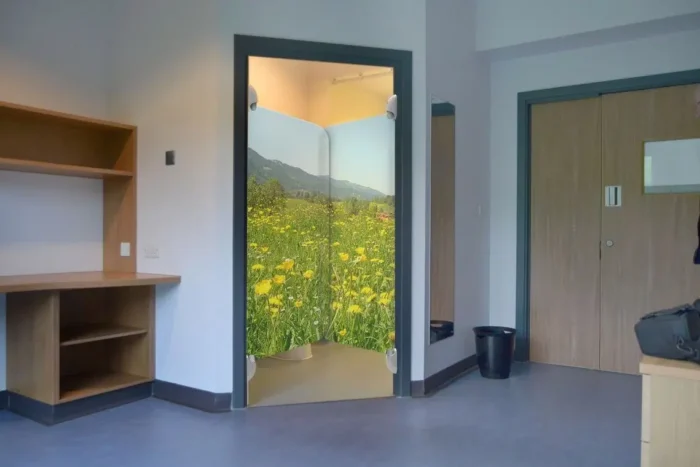
You told us that while load release was essential, practicality mattered just as much. The door needed to open and close normally, without the risk of accidental detachment during everyday use.
That insight guided our final design. We positioned the magnetic pivots at the top, allowing the door to swing open and close smoothly while minimizing the chance of unwanted release. The result is a door that works reliably in real Behavioral Health environments – safe, simple, and built for everyday care.
Phase 5: Soft launch
When we brought a near-complete prototype to the Design in Mental Health Conference in 2016, you told us that the door leaves felt too rigid when opened and closed. This feedback led to our fourth and final design insight: lightweight, flexible materials are safer in use.
We refined the material of the door leaves and carried out another round of development and testing before introducing a soft product launch in a live, controlled Behavioral Health environment.
This soft launch was a vital step in our design process. It allowed us to build complete confidence in the safety and performance of the ligature-resistant bathroom door before bringing it to market. When a product directly affects the safety of staff and patients, testing it in real conditions is essential.
Phase 6: Launch of the Ligature-Resistant Bathroom Door
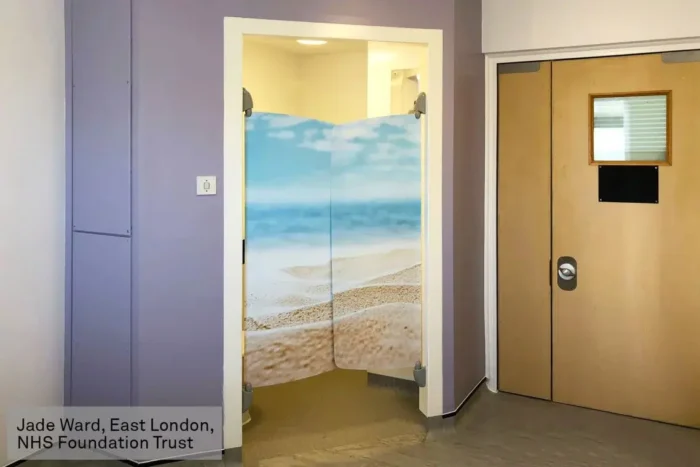
Our ligature-resistant bathroom door has now been launched and installed in a growing number of Behavioral Health facilities across the UK. These include The Junipers, Wonford PICU at Devon Partnership NHS Foundation Trust, the Coborn Centre at East London NHS Foundation Trust, and Hafan Y Coed at Cardiff and Vale University Health Board.
Each installation reflects our shared commitment to creating safer, more dignified spaces for people in Behavioral Health care.

Phase 7: Continued Product Improvement
Our design process does not end when a product launches. We continue to gather feedback and conduct our own research to make every product even better.
Since the initial launch, our ligature-resistant bathroom door has been further refined based on insights from the people who use it every day. We have reduced the door’s overall weight, introduced a new magnet system within the frame for easier reattachment, and adjusted the load release weight to enhance performance and safety.
Every improvement comes from one place: listening to our customers and learning from real Behavioral Health environments.

Let’s Build Safer Spaces Together
If you’re looking to create a safer and more stylish environment in your spaces, contact us today to learn more about our solutions.