Anti-barricade doorset - mechanical
Mental health inpatient settings are a safe space for people to receive vital care. For varying and complex reasons, barricade scenarios can often be a reality.
With 90% of inpatient suicides occurring in either the patient’s bedroom or bathroom, clinical staff need fast, reliable access into the room.
Our anti-barricade doorsets with mechanical locking (5-way SOS) are designed to keep patients safe whilst ensuring staff can gain access.
Most common barricade:
If the door has been locked from inside the bedroom, the staff key overrides the lock and the anti-barricade stop is released to gain emergency access in 5 seconds.
More determined barricades (e.g. a door wedged closed):
Staff can use their emergency toolkit that provides crucial pull advantage to gain emergency access in 60 seconds.
Interested in finding out more?

Keeping Patients Safe
Around 49 % of ligatures in mental health settings involve a door or its hardware. That reality drives our commitment to create doorsets and locksets that meet the highest anti-ligature standards and go even further to protect life.
Even with careful design, people in crisis can still find ways to create ligature points. That is why we developed the Full Door Ligature Alarm, a system that turns the entire door into a sensitive weighing scale. It instantly alerts staff at the nearest nursing station when pressure is detected, helping teams respond faster and bridge the moments between observations.
Every alert is an opportunity to act with care, protect dignity, and keep hope alive.
Supporting Clinical Care
Access when it matters most
In everyday use, our doors work just like any other. Staff can lock and unlock them with a key, maintaining normal routines and privacy for service users. The difference comes in a barricade scenario, where every second counts. Here, our design gives staff a critical pull advantage, ensuring they can open the door quickly and safely to reach the person inside.
Addressing safety alerts
A recent nationwide safety alert highlighted why dependable access is so vital. It reported that a patient had jammed a door closed, and staff could not get in. The outcome was tragic and a stark reminder that reliable access saves lives.
Whenever incidents like this occur, we review our own testing and listen closely to clinical feedback. Clinicians have told us that the most important function in a crisis is simple: getting into the room. It is not just about overriding a lock or releasing a stop; it is about regaining access fast enough to protect life.
Ask yourself
Can your doors:
-
Reliably override the lock, even if it has been tampered with?
-
Reliably release the anti barricade stop, even when under pressure?
-
Reliably pull open, even when wedged?
Because in a moment of crisis, confidence in your door system is essential for care, safety, and peace of mind.

Non-institutional Aesthetics
Safety and Recovery Led
Designed for comfort, created with care
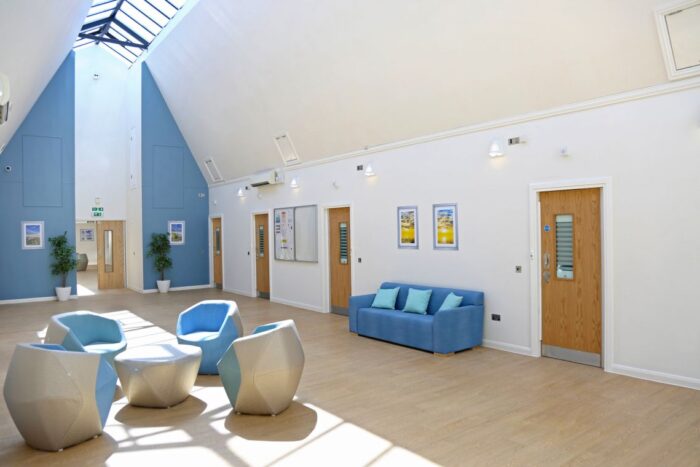
We all know how much our surroundings affect how we feel. In mental health environments, that impact is even greater. That is why our doorsets are designed with minimal visible metal fixings, helping to create spaces that feel safe, calm and therapeutic.
We work closely with people who deliver care and those who have experienced it first-hand. Their insight guides every design decision we make. Experts by lived experience told us that doors with visible screws or heavy metalwork made wards feel more like custodial settings than places of recovery.
So we design differently. Every detail is considered to help shift the atmosphere from institutional to inviting, supporting both safety and wellbeing. Because when a space feels healing, recovery feels possible.
The Priory Group
Mildmay Oaks provides inpatient rehabilitation for people with learning disabilities and autism, supporting each person on their journey towards community-based living.
A key part of that journey is environment. The facility was carefully designed to feel homely and non-institutional, helping residents build confidence and independence as they prepare to move into their next stage of care.


