Anti-Ligature Regulations & Legislation in the UK
What type of Anti-Ligature products exist?
On this page, we outline everything you might need to know regarding Anti-Ligature Regulations and Legislation in the UK.
We cover:
- Standards for Inpatient Mental Health [jump link]
- Environmental Design Guide – Adult Medium Secure Services [jump link]
- Anti-Ligature Considerations [jump link]
- Environmental Design of Doors [jump link]
- UK Anti-Ligature Legislation in Health and Mental Health Facilities [jump link]
- Brace Rules in Design [jump link]
While there is no global or universal anti-ligature policy that applies to all Mental Health settings, each NHS Trust within a Local Authority or Private Healthcare Unit will have its own anti-ligature policy in place, which is based on their interpretation and implementation of recommendations from the government as outlined below.
Standards for Inpatient Mental Health
The Royal College of Psychiatrists (RC PSYCH) and the College Centre for Quality Improvement (CCQI) have created the fourth edition of the ‘Standards for Inpatient Mental Health’ concerning inpatient care.
This report looks at Mental Health care standards to ensure they promote ‘equality, diversity, inclusion and sustainability in Mental Health services’.
Standards for Inpatient Mental Health Services
Inpatient Mental Health standards cover ward access, patient admission and discharge planning, the overall environment, staffing and governance and guide what good assessment, care, and treatment look like within Mental Health care facilities.
The principles to guide those standards are access, compassion, valuing relationships, patient and carer involvement, learning environment and culture, leadership, management, efficient and effective care, and overall safety.
Anti-ligature-specific standards note that ‘A risk assessment of all ligature points on the ward is conducted at least annually. An action plan and mitigations are implemented where risks are identified, and staff are aware of the risk points and their management.’
Environmental Design Guide – Adult Medium Secure Services
Medium Secure Services are there to provide effective care and recovery by:
- Reducing Risk
- Promoting Recovery
- Providing a safe, therapeutic environment
- Maintaining the integrity of the service
- Supporting patients with a care pathway to lower levels of security
- Working with patients to re-establish and integrate themselves successfully into the community.
- Environmental Design Guide
The patient’s needs vary and may depend on factors such as diagnosis, gender, age, and length of stay, prepared by the Secure Services Policy Team of the UK government, dates back to 2011 and outlines the fundamental principles for designing secure adult inpatient services and security requirements. These standards draw on the experience and expertise of clinicians, commissioners, and patients and include guidance for new developments: new builds and refurbishing existing facilities. The design guide and underpinning principles for medium secure environmental design cover:
- Design and technical detail
- Room design
- Maintaining service integrity
- The testing schedule for building materials
- Installation and use of CCTV.
Anti-Ligature Considerations
Fixtures and fittings within environmental designs should be anti-ligature and meet national safety standards, which include windows and doors, door closers and hinges, taps, shower heads and coat hooks.
The environments where anti-ligature fittings are relevant include the communal or private patient bathroom, the toilet, and within bedrooms (including anti-ligature privacy locks). To eliminate potential ligature points, taps, showers, bath, and toilet flush should be activated using wave–on–wave–off technology – a push button or an electronic sensor with timer control.
Environmental Design of Doors
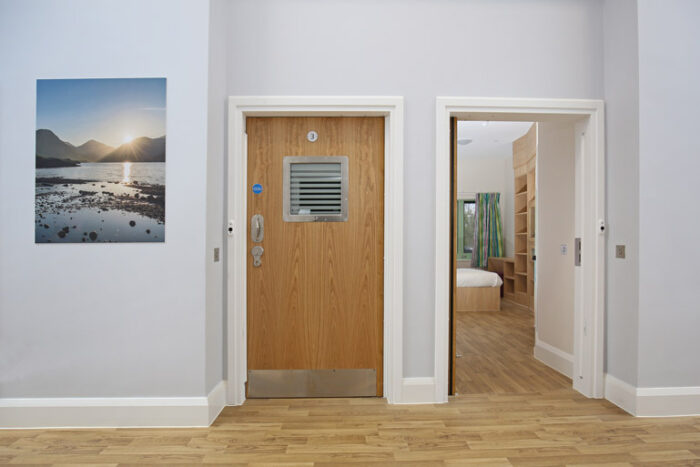
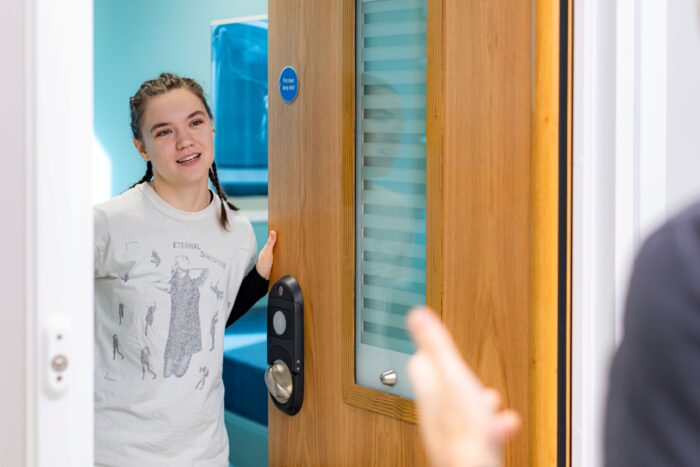
All parts of door design are carefully considered in developing a safe Mental Health environment – including the doors, frames, hinges, door furniture and observation panels.
Considerations include ligature, escape, breakage, barricade, concealment, dismantling and removal of parts. The security elements of this UK government guidance cover three areas that are interdependent:
UK Anti-Ligature legislation in Health and Mental Health facilities
In the UK, several pieces of legislation address the issue of anti-ligature in Mental Health and health facilities. Some of these include:
The Mental Health Units (Use of Force) Act 2018
Guidance for NHS hospitals and independent hospitals (providing NHS-funded care) in England about complying with the act’s requirements. This act sets out the rules for using force in Mental Health units, including using restraints and ligatures. It requires Mental Health units to have policies and procedures to minimise the use of force and protect the safety of patients and staff.
The act aims to set out the clear parameters for Mental Health professionals needed to prevent the inappropriate use of force and ensure accountability and transparency about the use of force in Mental Health units. Its definition of the ‘use of force’ is 1) physical, mechanical or chemical restraint of a patient or 2) the isolation of a patient, including seclusion and segregation.
This statutory guidance is intended for use by NHS hospitals and independent hospitals (providing NHS-funded care) in England that provide care and treatment to patients with Mental Health disorders.
The Mental Health (Northern Ireland) Order 1986
This order outlines the legal framework for treating people with mental disorders in Northern Ireland. It includes provisions on the use of restraints and ligatures in Mental Health units and requires the implementation of appropriate safeguards to protect the safety of patients.
The Health and Social Care Act 2008 (Regulated Activities) Regulations 2014
This regulation applies to all health and social care services in England, including Mental Health units. These services require all reasonable steps to prevent patients from harming themselves or others, including using ligatures.
The Mental Health (Care and Treatment) (Scotland) Act 2003
This act sets out the legal framework for caring for and treating people with mental disorders in Scotland. It includes provisions on the use of restraints and ligatures in Mental Health units and requires the implementation of appropriate safeguards to protect the safety of patients.
In addition to these pieces of legislation, specific guidelines and recommendations are issued by various bodies, such as the National Institute for Health and Care Excellence (NICE) and the Care Quality Commission (CQC), which address the issue of anti-ligature in mental health and health facilities.
Brace rules in design
“Brace rules” refer to best practice design strategies used in Mental Health facilities to reduce the risk of ligature attachment points. The concept of “brace rules” and the broader approach to anti-ligature design in Mental Health facilities are used in the UK, the US, and many other countries worldwide.
Anti-ligature design principles aim to create safe environments for patients and staff by eliminating or reducing potential ligature attachment points. The concept involves incorporating architectural elements that can support a person’s weight without breaking or causing harm instead of providing ligature attachment points.
For example, in a patient room, a horizontal grab bar can be installed on the wall to provide a brace for patients to lean on or support their weight, rather than a hook or a shower rail that could be used for ligature attachment. Similarly, furniture can be designed with a sturdy frame that can support a person’s weight without breaking, rather than using components that could be used for ligature attachment.
Brace rules are part of a broader approach to anti-ligature design in Mental Health facilities, which seeks to minimise the risk of self-harm by eliminating or reducing potential ligature attachment points. By incorporating elements that can support a person’s weight without breaking or causing harm, healthcare facilities can create a safer environment for patients and staff.
While the specific guidelines and standards may vary between countries, the UK and the US have regulatory bodies and professional organisations that guide best practices for designing, constructing, and operating Mental Health facilities. For example, in the UK, the National Institute for Health and Care Excellence (NICE) guides the design and operation of Mental Health facilities. In the US, the Joint Commission provides accreditation and certification services for healthcare organisations, including guidance on suicide prevention and the design of Mental Health facilities.
Find out more by visiting our Anti-Ligature Products page.
What products use the best-practice Anti-Ligature design?
When it comes to Mental Health environments, safety is always a top priority.
That’s why choosing the right products is essential to ensure the well-being of patients and staff. At Safehinge Primera, we take pride in offering a wide range of innovative and high-quality anti-ligature products designed to meet the diverse needs of Mental Health facilities. Providing peace of mind for patients and caregivers, our door systems (including ligature door alarms, anti-barricade doorsets, load-release fixings, door locksets & handles, and other anti-ligature products) have been tested by independent testing organisations, proven effective, and compliant with the latest technical standards.

Let’s Build Safer Spaces Together
If you’re looking to create a safer and more stylish environment in your spaces, contact us today to learn more about our solutions.