
Today is World Suicide Prevention Day. Whilst it’s a topic that’s consistently at the forefront of conversations at SHP, it’s so important to have days like today to raise awareness, platform the support available and provoke action.
This year’s theme, as outlined by the International Association for Suicide Prevention (IASP), is ‘Creating Hope Through Action’. It highlights the difference we can make to those experiencing a suicidal crisis – and it made us stop and reflect.
In mental health inpatient environments, people are at a very vulnerable time. Often, they have reached crisis point. 51% of ligature-based suicides occur on doors or door hardware. The default solution is to develop doors that physically prevent ligatures, and whilst these are fundamental, what are they doing to prevent patients’ feelings leading up to that decision?
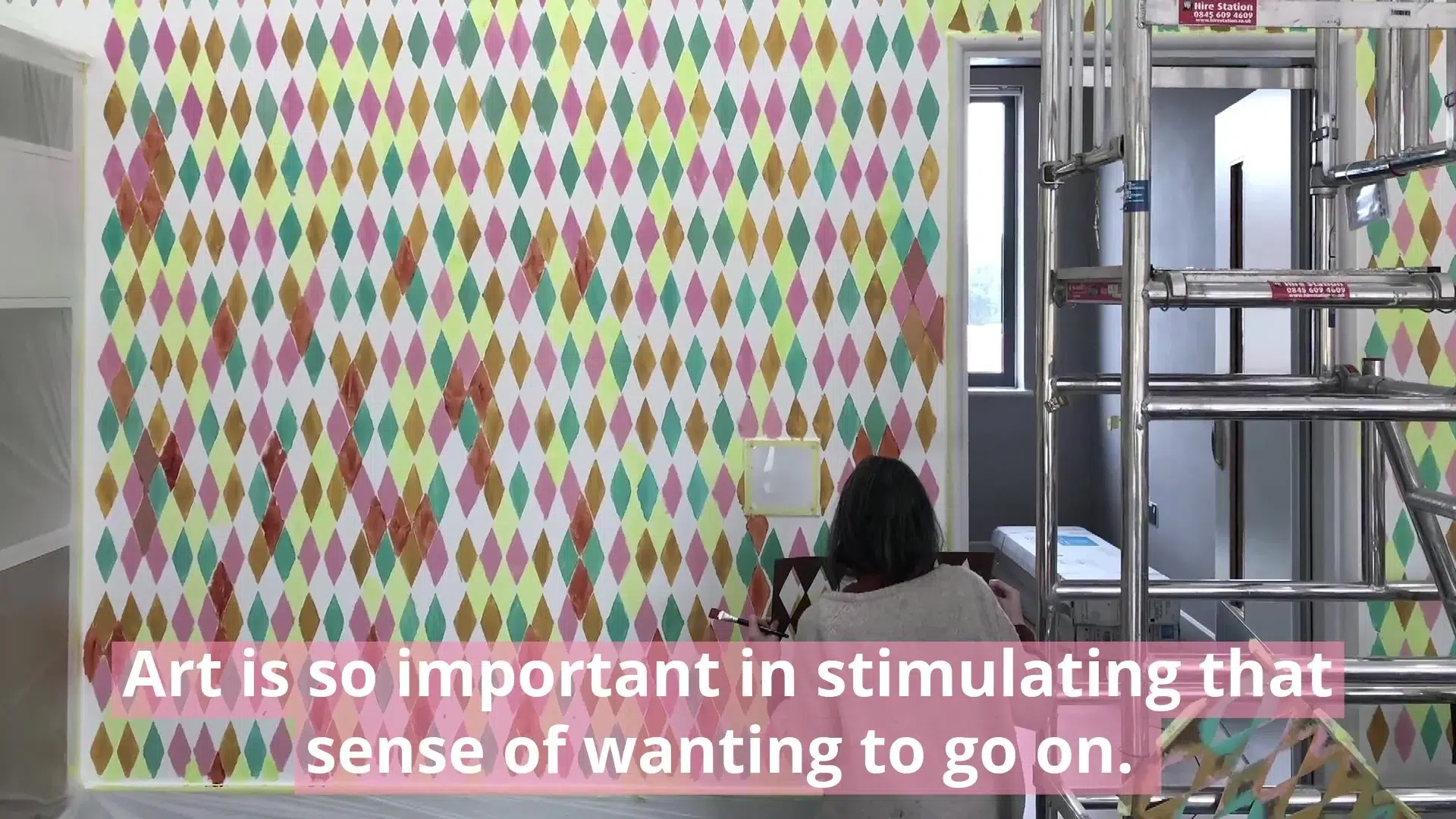
Introducing art into the bedroom
We’re all greatly affected by our surroundings. They can have a profound impact on our mood, thoughts and feelings. At Design in Mental Health 2021, we listened to a number of experts by experience including Kenita Watson, James Leadbitter and David Parkin, reinforce this.
Art has the power to transform and humanise any harsh clinical environment, and so it gives us great pride to have partnered with arts and mental health charity Hospital Rooms.
By printing original Hospital Rooms artworks onto our award-winning en-suite doors, we’re combining safety with expression, choice and creativity.
In addition to our existing range of prints available for our en-suite doors, <RBAY/\VBS> by Charley Peters and Flags and Flares by Tim A Shaw have been added.
Dedicated to Design
We know our work impacts lives, so we design for good, not for ease. We work from first principles to solve our customers’ problems – and we’re delighted that 2020 saw the official launch of two groundbreaking products for mental health.
Firstly in March, we launched our Integrated Override Lockset – a unique electronic lock with built-in mechanical override. The lock is designed to enhance patient autonomy by giving each patient a programmed wristband for access; whilst maintaining peace of mind for staff in an emergency with the built-in mechanical override.
Thank you once again to both Charley and Tim. We’ve already received hugely positive feedback on the designs and really believe that these designs will go a long way in helping to create therapeutic spaces for recovery.