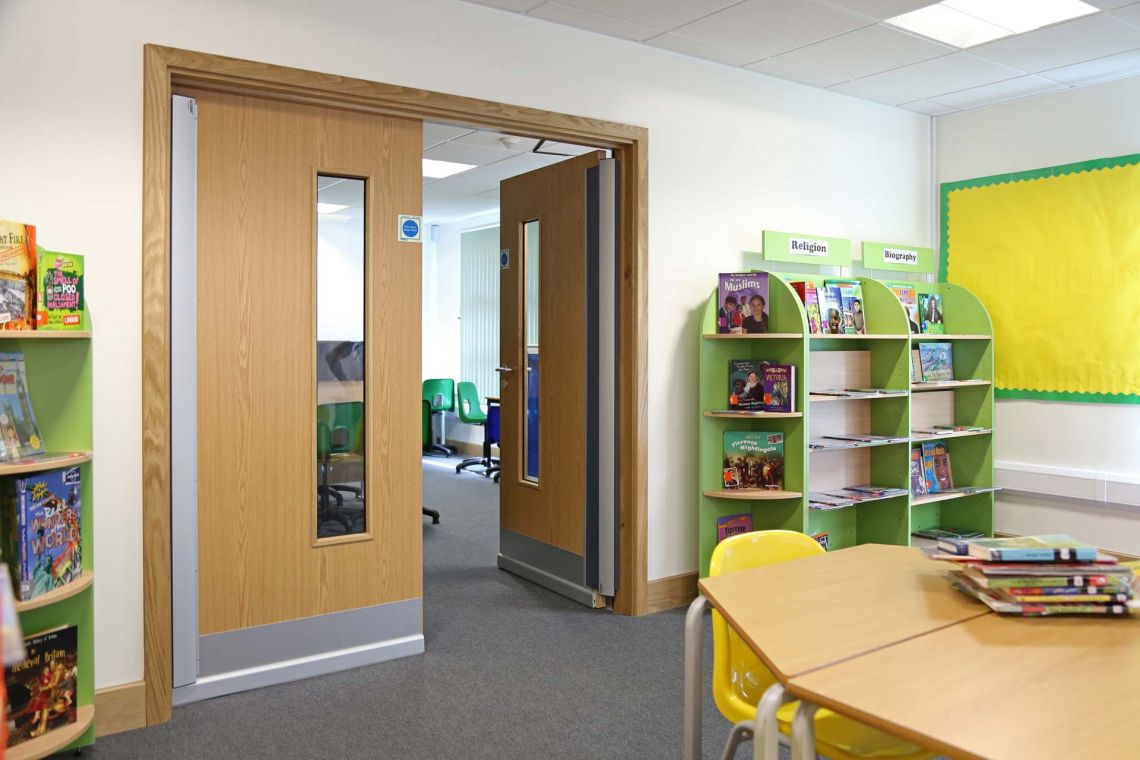
Worcesters Primary School
At Safehinge Primera, we know estates teams and AIDM partners are constantly balancing safety, compliance and long-term value — especially in environments prioritising both child safety and regulatory performance. That’s why Worcesters Primary School’s approach to finger-guard protection is such a valuable example. Worcesters is a community primary and nursery school serving children aged 3–11 years, with a total capacity of 630 pupils plus 60 nursery places in the London Borough of Enfield. Like many educational establishments, they were determined to design out the risk of trapped fingers across their building fabric while maintaining a seamless aesthetic.
.
Local Authority: Enfield
Project type: Refurbishment
Architects: Surface to Air Architects
Products supplied:
A complete Offering
The Challenge
Finger entrapment injuries are common in high-traffic educational settings — and traditional materials like plastic guards often fail early, exposing both children and staff to avoidable risk. Worcesters Primary needed solutions that would:
- Eliminate finger-trap hazards on all classroom and corridor doors
- Withstand high-use and impact conditions
- Blend seamlessly with existing finishes
- Support existing fire performance of doorsets

The Solution
Worcesters chose a two-tier approach that reflects both strategic refurbishment and long-term risk management:
1. Alumax Integral Finger Guards — New Build Section
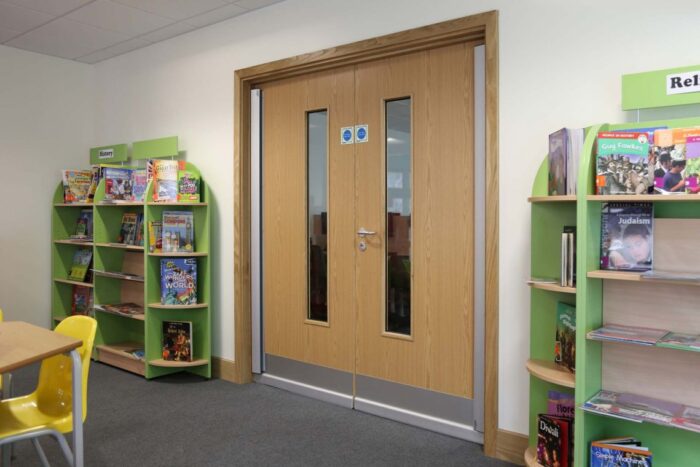
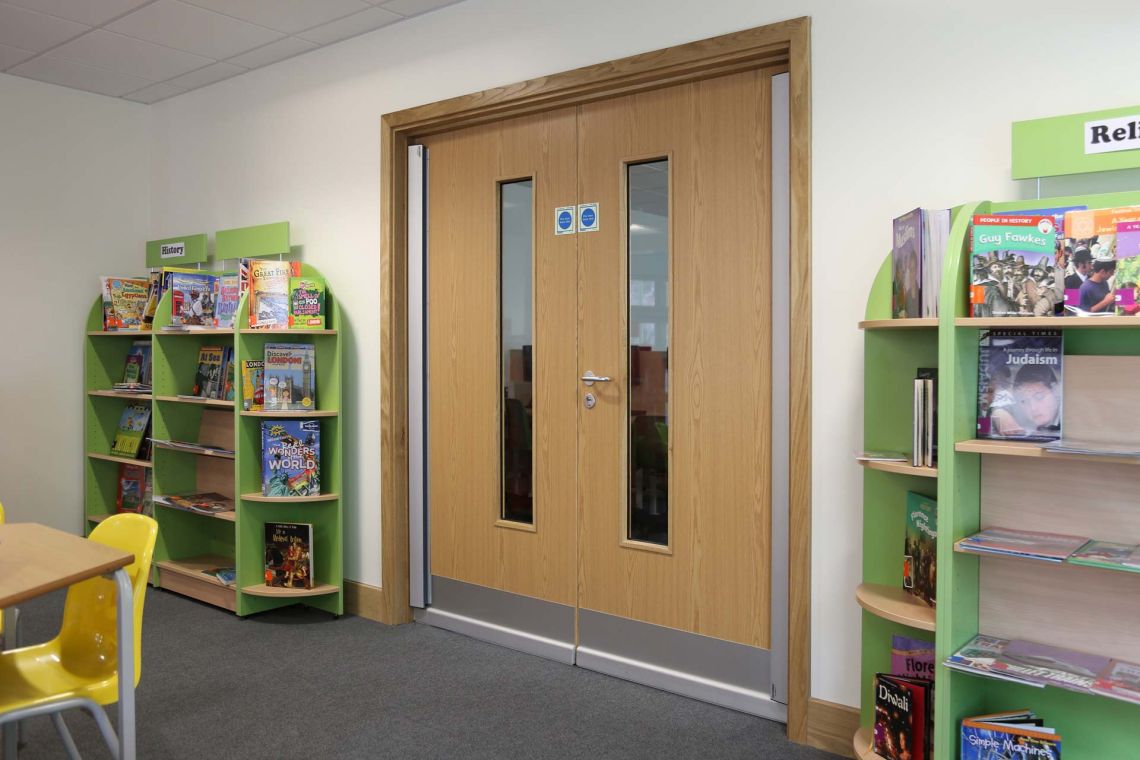
For the newly constructed extension delivered via Portakabin in 2014, the project team specified Alumax integral finger guards. These are designed into the door and frame, removing the hinge gap entirely and protecting vulnerable users from finger entrapment.
Because Alumax integrates within the door assembly, it does not impact fire ratings — and importantly, fire test evidence is available for Alumax to demonstrate its performance within fire resisting doors. This means estates teams can specify robust finger safety without compromising fire compartmentation or evacuation strategies.
Why This Matters to Estates Teams and AIDM Partners
2. Alumini Retrofit Finger Ejecting Guards — Existing Doors
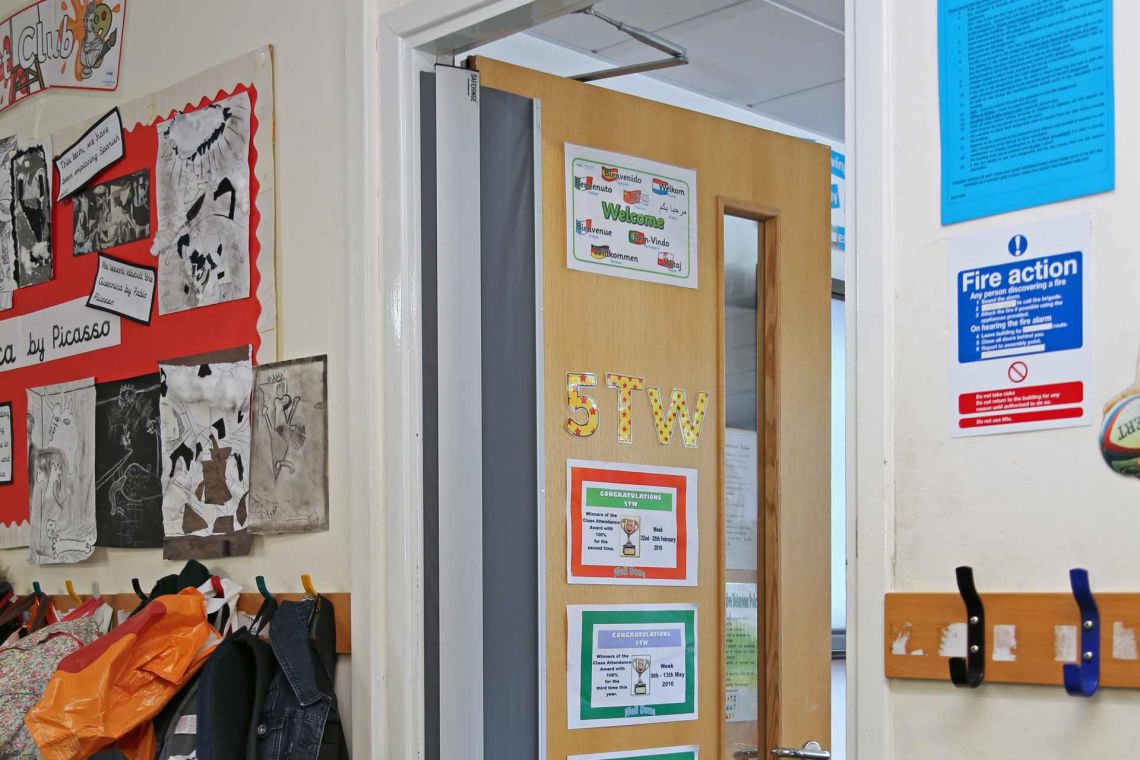
Following the extension, the school’s estates team recognised that their legacy plastic fingers guards were cracking and becoming a maintenance burden. They opted to retrofit 80 Alumini finger guards across existing doors throughout the school.
The Alumini guard features a patented finger-ejection system, active protection that gently pushes fingers out of the hinge gap — a critical benefit in busy, high-traffic areas such as schools, clinics and leisure spaces.
Because Alumini is surface mounted and aluminium-based, it retains the existing doorset’s fire and acoustic performance. Retrofit finger guards do not change the performance characteristics of the door — meaning that current FD30/FD60 ratings, seals and intumescent specifications remain intact and compliant.

Why This Matters to Estates Teams and AIDM Partners
1. Enhanced Safety Without Compromise
By choosing aluminium finger guards that are either integrated (Alumax) or retrofit (Alumini), Worcesters eliminated finger entrapment hazards without undermining fire safety — a key concern for estates and compliance partners alike.
2. Durable, Low Maintenance Performance
Unlike plastic alternatives that crack and degrade, aluminium guards are built to last in heavy-use environments — reducing call-backs and long-term replacement costs.
3. Confidence in Compliance
Fire test evidence for integrated finger guards and the inherent design neutrality of retrofit solutions give confidence that door safety upgrades can proceed without jeopardising fire compartmentation, building control compliance, or evacuation planning.
4. Aesthetics That Support Operational Goals
Both aluminium solutions offer clean lines and discreet profiles that support school branding and design aspirations — helping stakeholders deliver environments that are not only safe but also welcoming and well-specified.
Other Finger Guard Case Studies
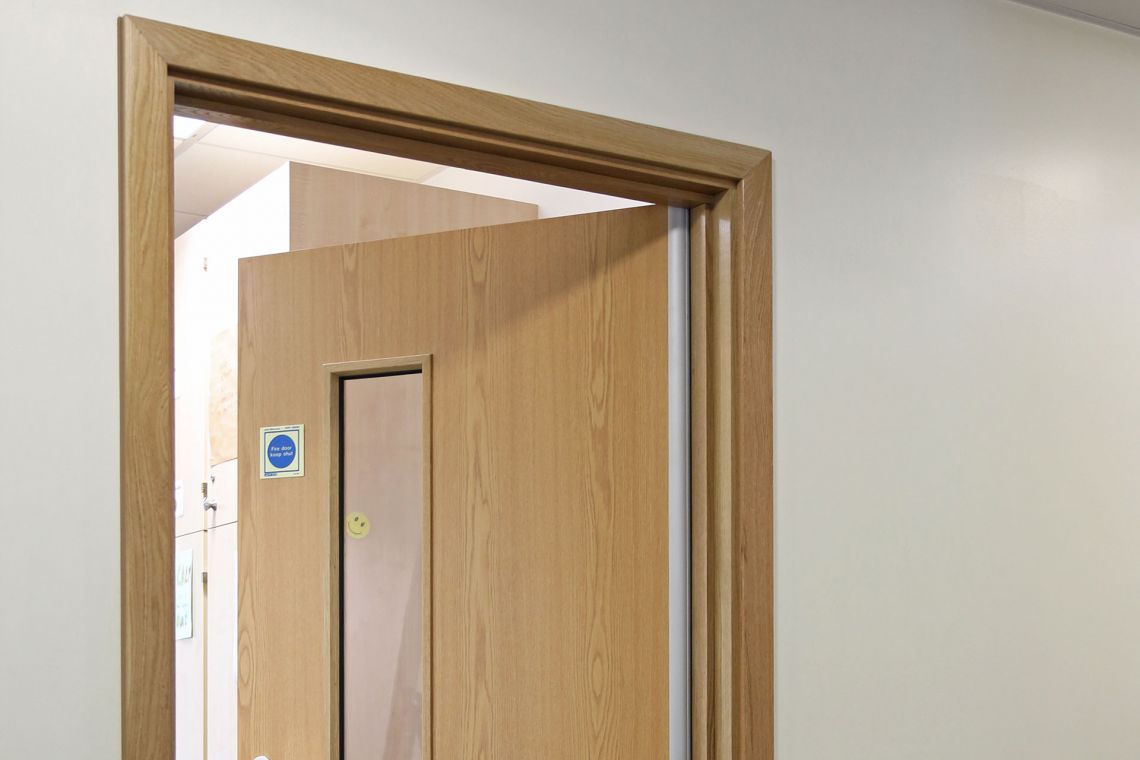
 Cwm Ifor Primary School
Having grown frustrated with the durability of plastic finger-guards, Caerphilly LEA requested our Integral Finger-Guards
Cwm Ifor Primary School
Having grown frustrated with the durability of plastic finger-guards, Caerphilly LEA requested our Integral Finger-Guards
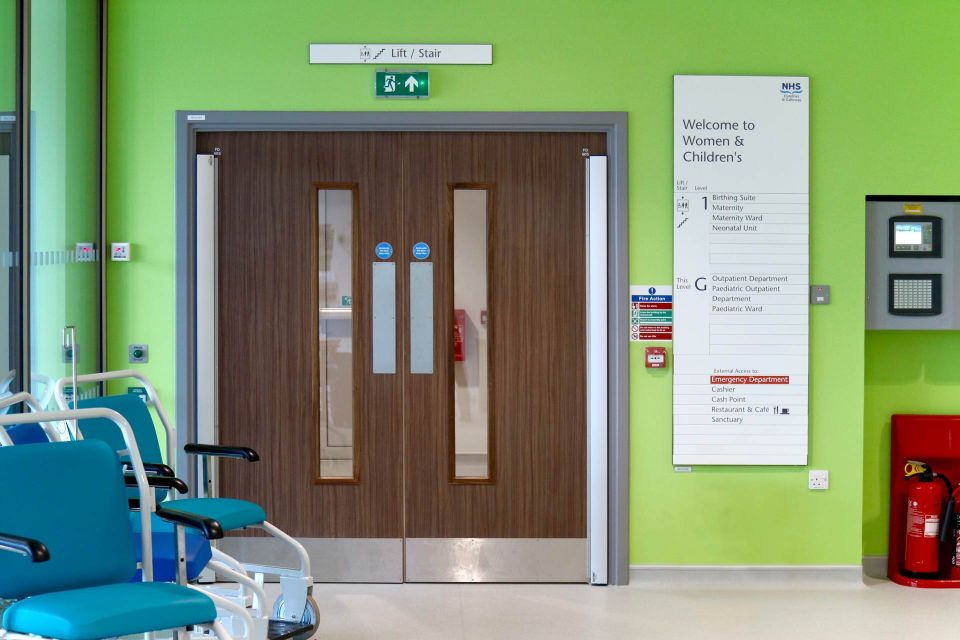 Dumfries and Galloway Royal Infirmary
Our finger ejecting guards were used on all automatic doors and hinged doors in the paediatric ward
Dumfries and Galloway Royal Infirmary
Our finger ejecting guards were used on all automatic doors and hinged doors in the paediatric ward
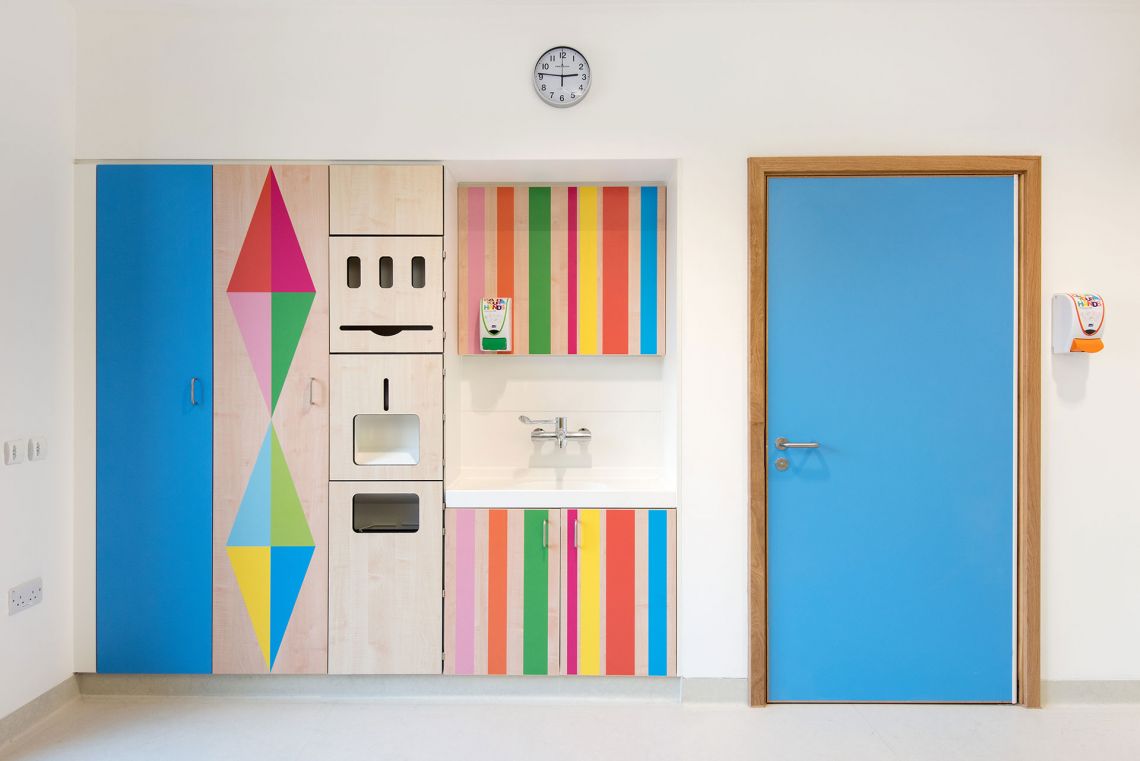 Sheffield Children's Hospital
Alumax Integral Finger-Guards were installed to balance safety with homeliness
Sheffield Children's Hospital
Alumax Integral Finger-Guards were installed to balance safety with homeliness
 Ask Italian Restaurants
With their sleek aesthetic and superior safety, our finger guards blended in seamlessly with their stylish restaurants
Ask Italian Restaurants
With their sleek aesthetic and superior safety, our finger guards blended in seamlessly with their stylish restaurants